
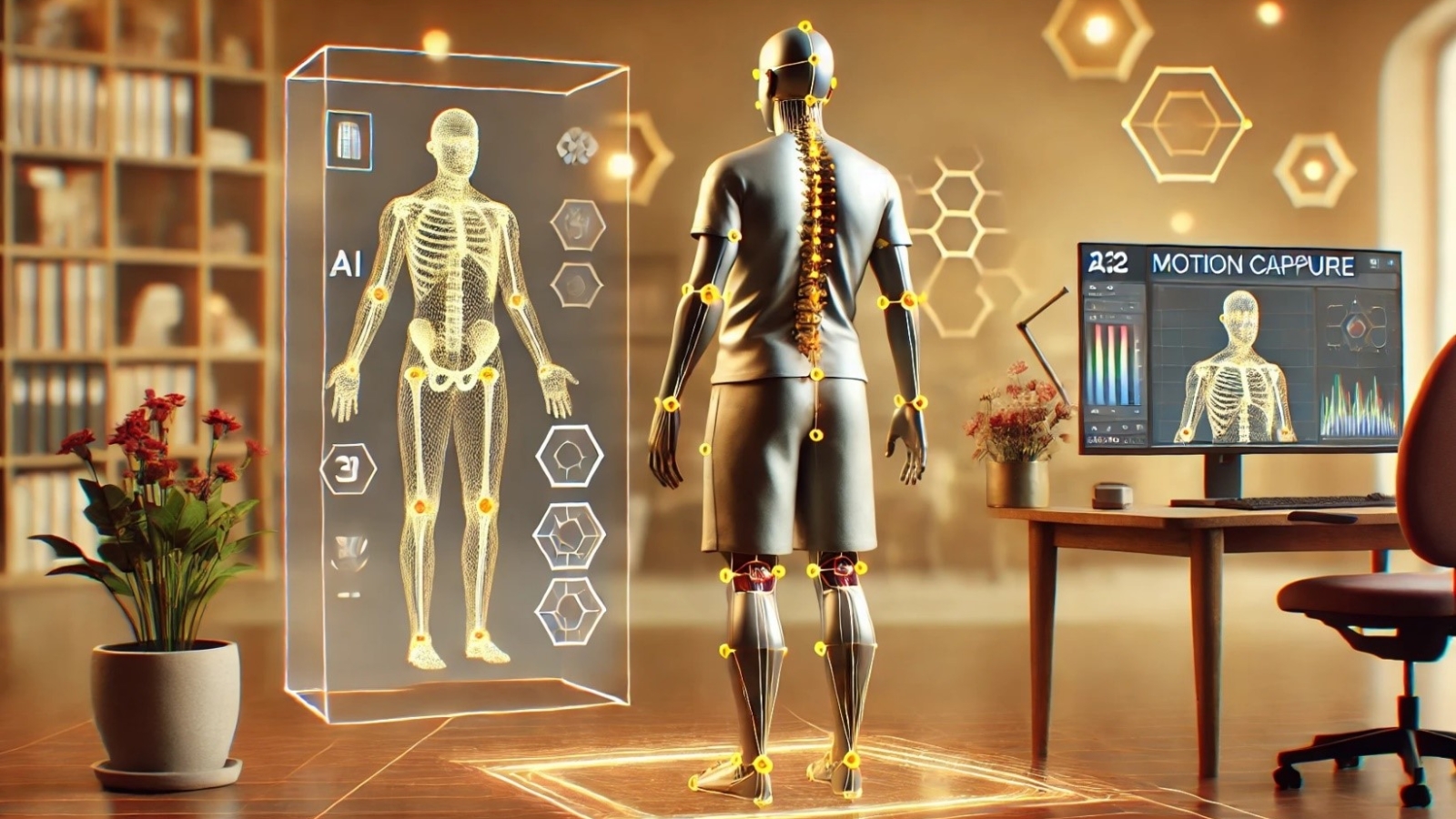
In “AI-Driven Posture Correction for Workplace Well-being”, the authors present a system that leverages artificial intelligence and wearable sensors to monitor, assess, and correct posture in real time within workplace settings (especially for sedentary workers). The motivation is that prolonged sitting and incorrect postures contribute to musculoskeletal disorders (MSDs), diminished well-being, and reduced productivity.
Methodology & Design
The system employs multiple sensor modalities—IMUs (inertial measurement units), accelerometers, and biopotential sensors—to continuously collect data related to body orientation, movement, and muscle signals. The AI models are built using frameworks like TensorFlow, Keras, and MediaPipe to perform keypoint detection and posture estimation. From the detected keypoints and sensor signals, the system computes joint angles and deviations from expected ergonomic posture thresholds.
A user-centered design principle is applied: the device gives real-time visual and audio feedback cues to prompt the user to correct suboptimal posture (e.g. slouching, leaning forward). Users may have profiles that consider their desk/chair height, body measurements, and personal preferences to tailor the corrective cues.
Key Findings & Outcomes
Through prototype testing and individual experiments, the authors report that the system is effective at detecting posture deviations and prompting timely corrections. They suggest that integrating AI-driven posture correction can reduce risk factors associated with poor sitting behavior and may foster a healthier work environment. The authors also highlight that continuous assessment and feedback can cultivate better posture habits over time.
Challenges & Considerations
The authors acknowledge several hurdles in deploying such a system broadly:
- Sensor accuracy & calibration: Ensuring that sensor readings are precise under real working conditions and across different body types.
- Real-world robustness: Handling diverse lighting, occlusions, movement artifacts, and environmental noise that may confound posture detection.
- User acceptance & intrusiveness: Some users may resist constant monitoring or find audio/visual cues distracting.
- Privacy & data ethics: Continuous monitoring of people’s posture and movement introduces privacy risks that must be handled carefully.
- Scalability & personalization: Adapting models to different workplaces, chair/desk configurations, and user profiles is nontrivial.
Conclusion & Implications
The authors conclude that AI-driven posture correction systems offer promising potential to proactively support ergonomic behavior, reduce MSD risk, and promote wellness in modern office settings. However, they emphasize that technical, ethical, and human factors challenges must be addressed before widescale adoption. They recommend future research in long-term deployment, user studies, improved adaptability, and privacy safeguards.
Add a Comment